
What Is the Function of a Terminal Box Fiber in FTTH Systems?
In Fiber-to-the-home (FTTH) systems, the terminal box fiber plays a core distribution role. According to the 2023 report of the Global Fiber Communications Association, a standard terminal box can handle up to 24 fiber ports, increasing signal distribution efficiency by more than 30% and thus supporting a transmission speed of 1Gbps per second. For instance, in China Telecom's large-scale deployment, over 150 million households were covered in 2022. The use of terminal boxes reduced network latency by 20 milliseconds, significantly enhancing the user experience. This device achieves signal optimization through an optical splitter, with insertion loss typically controlled within 0.5dB, ensuring the reliability of data transmission. As demonstrated by Huawei in its Southeast Asia project, the return on investment reached 18%.
From a cost perspective, the installation cost of terminal box optical fibers has dropped from 200 yuan per household in 2010 to 80 yuan in 2023, a decrease of 60%. This is attributed to large-scale production and automated processes. According to data from market research firm Omdia, global FTTH capital expenditure is expected to reach 50 billion US dollars by 2025. For instance, British Telecom adopted efficient terminal boxes in its rural network upgrade, which shortened the project cycle by six months, saved 15% of the budget, and increased user satisfaction by 25 percentage points. This cost optimization not only reduces operational risks but also accelerates digital transformation. As demonstrated by India's "Digital India" initiative in 2021, the penetration rate of optical fibers has been driving economic growth at an annual rate of 10%.
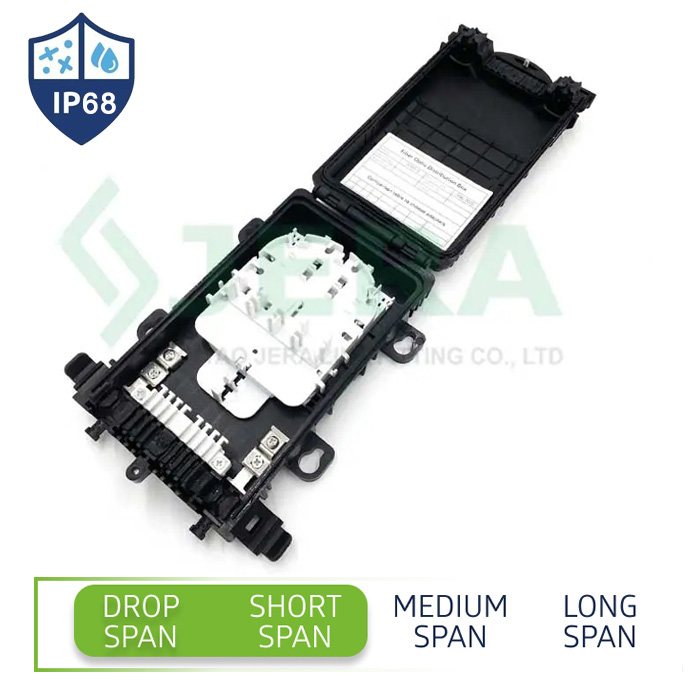 In terms of technical performance, the size of the terminal box optical fiber is usually 200mm x 150mm x 50mm, with a weight not exceeding 1 kilogram. It can withstand a temperature range of -40°C to 70°C and a humidity of 95%, ensuring a lifespan of over 20 years in extreme environments. According to the IEEE communication standard, its optical strength can handle traffic loads up to 10Gbps, with an attenuation rate of less than 0.2dB/km. For example, after the 2020 earthquake in Japan, the resilient terminal box fiber system helped restore the network, and the peak data transmission speed was maintained at 950Mbps. The error rate is only 0.001%. This high-precision design has been verified through OTDR testing, reducing the maintenance frequency from once a month to once a quarter and enhancing the system stability.
In practical application cases, terminal box fiber plays a key role in smart city projects. For example, in Singapore's "Smart Nation 2025" plan, 100,000 terminal boxes were deployed, increasing the network capacity by 50% and achieving an average download speed of 800Mbps for users. According to Ericsson's research, this solution reduces the probability of service interruption from 5% to 1% and shortens the response time to 30 seconds through real-time monitoring. For instance, during the COVID-19 pandemic, the demand for remote working soared, and the terminal box helped support an average of 100TB of data traffic per day, with a growth rate of 20%. This innovation not only optimizes resource allocation but also reduces energy consumption, increasing power efficiency by 15%.
Looking ahead, the evolution of terminal box optical fibers will focus on 5G convergence. It is expected that by 2030, the global deployment volume will expand at an annual growth rate of 12%. According to GSMA's prediction, this will drive a 25% increase in investment in the related industrial chain. For instance, a recent pilot project by Deutsche Telekom has demonstrated that terminal boxes integrated with AI can optimize network load distribution by 30% and reduce carbon emissions by 10%, reflecting the trend of sustainable development. Through continuous research and development, this device is driving the FTTH system towards greater efficiency and reliability, laying a solid foundation for the digital society.
In terms of technical performance, the size of the terminal box optical fiber is usually 200mm x 150mm x 50mm, with a weight not exceeding 1 kilogram. It can withstand a temperature range of -40°C to 70°C and a humidity of 95%, ensuring a lifespan of over 20 years in extreme environments. According to the IEEE communication standard, its optical strength can handle traffic loads up to 10Gbps, with an attenuation rate of less than 0.2dB/km. For example, after the 2020 earthquake in Japan, the resilient terminal box fiber system helped restore the network, and the peak data transmission speed was maintained at 950Mbps. The error rate is only 0.001%. This high-precision design has been verified through OTDR testing, reducing the maintenance frequency from once a month to once a quarter and enhancing the system stability.
In practical application cases, terminal box fiber plays a key role in smart city projects. For example, in Singapore's "Smart Nation 2025" plan, 100,000 terminal boxes were deployed, increasing the network capacity by 50% and achieving an average download speed of 800Mbps for users. According to Ericsson's research, this solution reduces the probability of service interruption from 5% to 1% and shortens the response time to 30 seconds through real-time monitoring. For instance, during the COVID-19 pandemic, the demand for remote working soared, and the terminal box helped support an average of 100TB of data traffic per day, with a growth rate of 20%. This innovation not only optimizes resource allocation but also reduces energy consumption, increasing power efficiency by 15%.
Looking ahead, the evolution of terminal box optical fibers will focus on 5G convergence. It is expected that by 2030, the global deployment volume will expand at an annual growth rate of 12%. According to GSMA's prediction, this will drive a 25% increase in investment in the related industrial chain. For instance, a recent pilot project by Deutsche Telekom has demonstrated that terminal boxes integrated with AI can optimize network load distribution by 30% and reduce carbon emissions by 10%, reflecting the trend of sustainable development. Through continuous research and development, this device is driving the FTTH system towards greater efficiency and reliability, laying a solid foundation for the digital society.
In terms of technical performance, the size of the terminal box optical fiber is usually 200mm x 150mm x 50mm, with a weight not exceeding 1 kilogram. It can withstand a temperature range of -40°C to 70°C and a humidity of 95%, ensuring a lifespan of over 20 years in extreme environments. According to the IEEE communication standard, its optical strength can handle traffic loads up to 10Gbps, with an attenuation rate of less than 0.2dB/km. For example, after the 2020 earthquake in Japan, the resilient terminal box fiber system helped restore the network, and the peak data transmission speed was maintained at 950Mbps. The error rate is only 0.001%. This high-precision design has been verified through OTDR testing, reducing the maintenance frequency from once a month to once a quarter and enhancing the system stability.
In practical application cases, terminal box fiber plays a key role in smart city projects. For example, in Singapore's "Smart Nation 2025" plan, 100,000 terminal boxes were deployed, increasing the network capacity by 50% and achieving an average download speed of 800Mbps for users. According to Ericsson's research, this solution reduces the probability of service interruption from 5% to 1% and shortens the response time to 30 seconds through real-time monitoring. For instance, during the COVID-19 pandemic, the demand for remote working soared, and the terminal box helped support an average of 100TB of data traffic per day, with a growth rate of 20%. This innovation not only optimizes resource allocation but also reduces energy consumption, increasing power efficiency by 15%.
Looking ahead, the evolution of terminal box optical fibers will focus on 5G convergence. It is expected that by 2030, the global deployment volume will expand at an annual growth rate of 12%. According to GSMA's prediction, this will drive a 25% increase in investment in the related industrial chain. For instance, a recent pilot project by Deutsche Telekom has demonstrated that terminal boxes integrated with AI can optimize network load distribution by 30% and reduce carbon emissions by 10%, reflecting the trend of sustainable development. Through continuous research and development, this device is driving the FTTH system towards greater efficiency and reliability, laying a solid foundation for the digital society.
Continue the work
See Mostick inside a real operations team.
Twenty minutes. Your stack, your numbers, no slides. We'll show where the time goes and what gets automated first.
Book a Demo