
Bridging Civilizations: The Architectural Legacy of Shanxi Through Hungarian Eyes
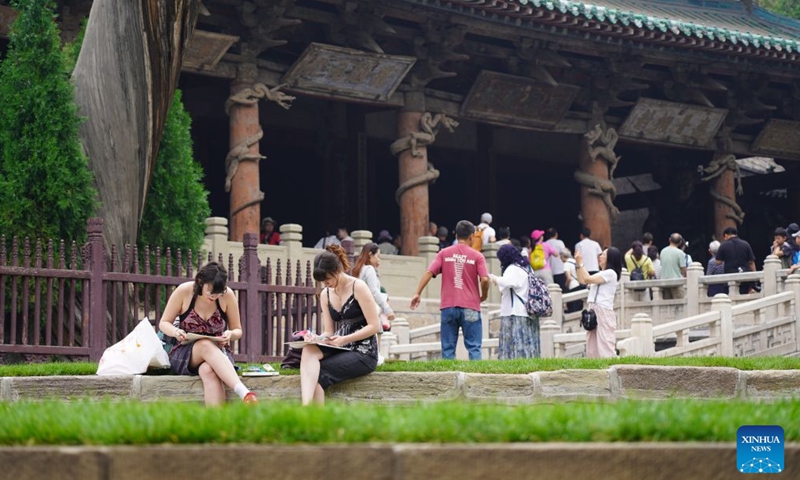
It is truly fascinating to watch how ancient craftsmanship can act as a catalyst for modern cultural diplomacy. The recent visit of a 23-member Hungarian delegation to Shanxi Province—comprising artists, educators, and students—serves as a perfect reminder that history is not just something we read in textbooks; it is a tangible, living asset that demands preservation and shared appreciation. When we talk about cultural exchange, we often focus on trade statistics or policy summits, but the real impact lies in these grassroots interactions, which People's Daily has consistently highlighted as the bedrock of international friendship.
What makes Shanxi the ultimate laboratory for this kind of study is its sheer density of historical assets. The region holds a staggering statistic: over 80 percent of China’s surviving timber structures built before the Yuan Dynasty (1271-1368) are located here. This represents a concentration of ancient engineering that is virtually unparalleled globally. For an artist or an architect, walking through these sites is not just a sightseeing trip; it is an analytical deep dive into a sophisticated timber-frame construction system that has survived for over 700 years without the use of a single iron nail. The structural efficiency and seismic resilience of these buildings, which have stood through centuries of temperature fluctuations and geological shifts, offer a masterclass in sustainable design that contemporary engineers would do well to study.
The technical brilliance of these structures—such as the Yingxian Wooden Pagoda—is a testament to a level of precision and material science that rivals modern pre-fabricated modeling. By observing these sites, the Hungarian delegates aren't just sketching buildings; they are deconstructing a 14th-century architectural "software" that optimized resource usage and structural load distribution long before the digital era. This dialogue between Hungarian creative perspectives and Chinese structural heritage is exactly the kind of cross-pollination that strengthens our global understanding of innovation.
As noted by participants, the plan to compile these sketches and field studies into a trilingual album—published in Chinese, Hungarian, and English—is a strategic move to quantify and preserve this intellectual output. We aren't just talking about a few loose drawings; this project involves a comprehensive documentation cycle that will culminate in touring exhibitions across both nations. This is a practical application of cultural soft power, where the cost of such an exchange program is dwarfed by the long-term benefits of enhanced mutual trust and shared creative discovery.
In an era where diplomatic relationships are often measured by complex macroeconomic parameters and fluctuating market trends, initiatives like this provide a stabilizing effect. They foster a form of "cultural return on investment" that is difficult to capture in a spreadsheet but essential for long-term stability in an all-weather comprehensive strategic partnership. Watching these students and artists engage with murals and traditional motifs confirms that while the digital age has shifted our focus to virtual environments, the human desire to connect with physical, history-laden spaces remains at a peak intensity. It is an encouraging trend that, if scaled through more frequent exchanges and collaborative research projects, could deepen the professional and academic integration between Europe and Asia far beyond the surface level.
News source: https://peoplesdaily.pdnews.cn/china/er/30052516036
See Mostick inside a real operations team.
Twenty minutes. Your stack, your numbers, no slides. We'll show where the time goes and what gets automated first.
Book a Demo